
Your First AI Agent: Simpler Than You Think
Building your first AI agent doesn't require a PhD or a complex framework. At its core, an AI agent is simply a program that uses a large language model (LLM) to decide what actions to take in a loop: perceive the environment, reason about the next step, execute an action, and observe the result. This perceive-think-act cycle is what separates agents from simple chatbots, agents take autonomous action in the world rather than just generating text responses.
The most common pattern for building agents is called ReAct (Reason + Act). In a ReAct agent, the LLM first reasons about the current situation and what tool or action would be most helpful, then executes that tool and feeds the result back into the next reasoning step. You can implement a basic ReAct agent with nothing more than a while-loop, an LLM API call, and a function that executes tools based on the model's output. No framework required, just Python and an API key.
This guide walks through building a complete working agent from scratch, starting with a single tool (like web search) and gradually adding capabilities. You'll learn how to define tools as functions the LLM can call, how to parse the model's tool-use decisions, and how to handle errors gracefully when tools fail. The key insight is that complexity should grow with your understanding, start simple, validate that it works, then layer on features like memory, multi-tool routing, and conversation history. By the end, you'll have a functioning agent and a deep understanding of the patterns that power every agent framework on the market.
TL;DR
A beginner-friendly guide to building your first AI agent from scratch, covering what agents really are, how they work, and step-by-step instructions to build one.
Key Takeaways
AI agents are programs that use LLMs to decide what actions to take in a loop, perceive, think, act, repeat.
You don't need a framework to build your first agent. A simple while-loop with an LLM call and tool execution is enough.
The ReAct pattern (Reason + Act) is the most common agent architecture, the agent reasons about what to do, then executes a tool.
Start with a single tool (like web search), then gradually add more. Complexity should grow with your understanding.
Hello everyone,
Quick one today, because it’s news. For the past months, my co-founder and I have been working days and nights on something I’ve never offered before, and you’re hearing about it first.
Building a prototype with AI is easy. Building to production is hard. We show you how to get there with the right methodology.
It’s called Prompt to Production: a full course on building software with AI the way professionals do. 16 lectures, each paired with its own hands-on lab, built to take you up gradually, holding your hand exactly as much as you need, from your first structured prompt to a working production system.
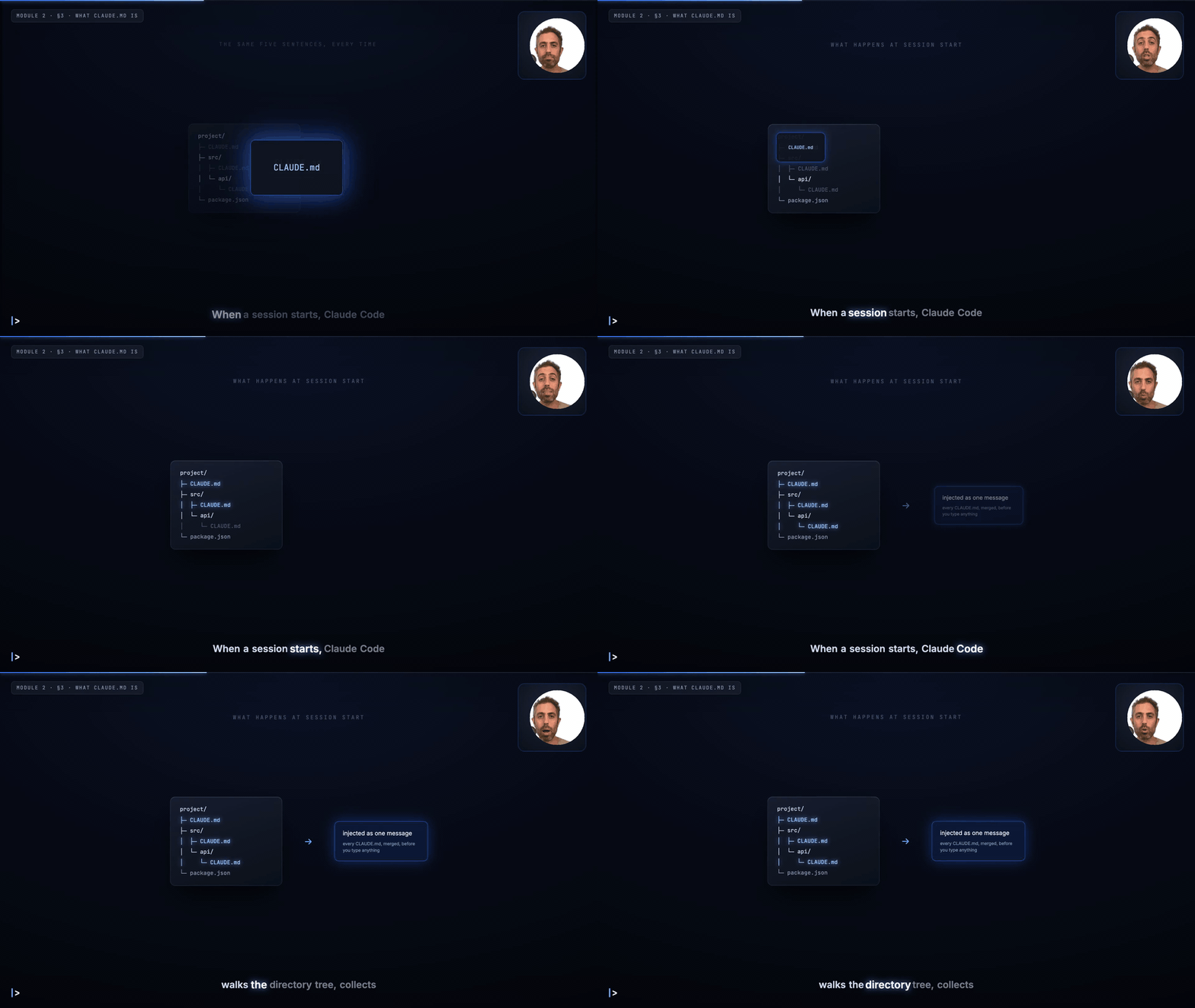
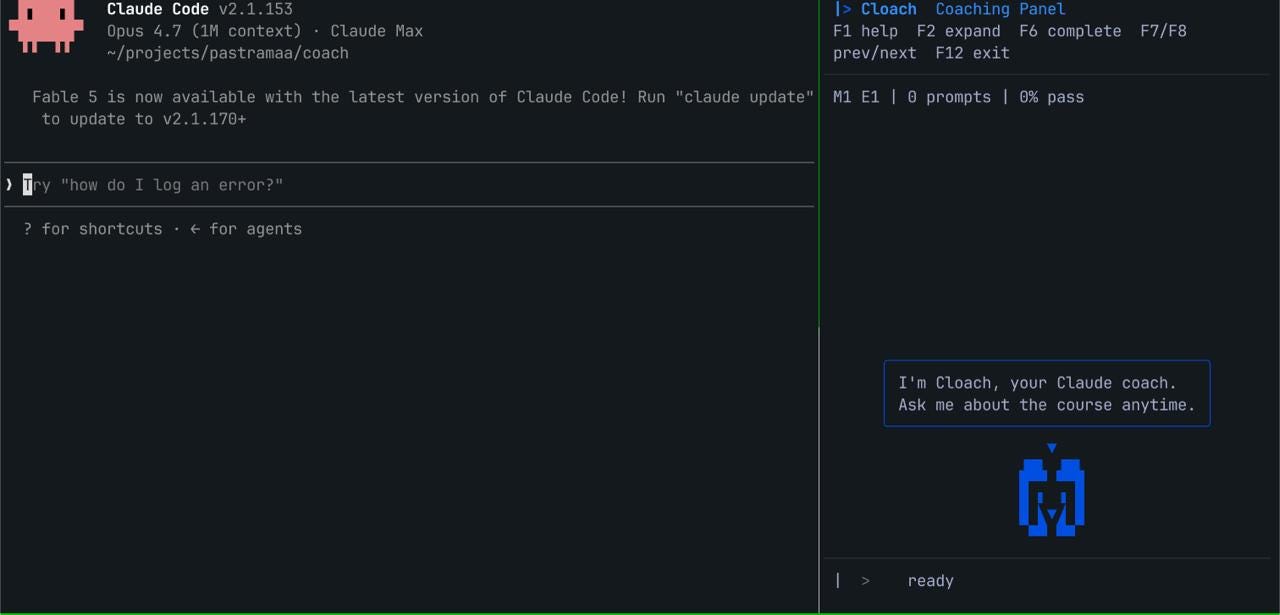
It teaches the paradigms behind software that’s reliable, efficient, and modular, the way the strongest production teams build with AI today. An AI coach works with you inside your own terminal the whole way, and you finish with two things: a method you’ll use every day, and a real product, deployed and live. About 15 focused hours, at your own pace.
Two things before it opens to the public:
Ten people get free early access this month. The full course, hands-on, in exchange for honest feedback. It’s an application, not first-come-first-served, and it’s inside the form below.
Everyone on the waiting list locks in the founding price, lower than what the course will cost at public launch.
Joining takes about two minutes, and the short questionnaire inside directly shapes the final course and what early members get.
Related Tutorials
Free Resources
Download free guides, cheatsheets, and templates curated from 130+ tutorials on RAG, AI Agents, and Prompt Engineering.
Also available on Substack
Prefer Substack? This article is also on our newsletter, read by 40K+ AI engineers.
Related Articles
How to Choose Your AI Agent Framework
A practical comparison of AI agent frameworks, when each shines, their trade-offs, and how to choose the right tool for your project.
Google's Agent2Agent (A2A) Explained
Google's new Agent2Agent protocol enables AI agents to communicate and collaborate across platforms. Here's how it works and why it matters.
AI Deep Research Explained
How AI deep research tools work, from multi-step reasoning to iterative search and synthesis. A technical breakdown of the emerging research agent pattern.
Get More AI Insights Weekly
Join 40K+ AI engineers getting deep dives on agents, RAG, and prompt engineering every week.